
Considering Adaptive Housing Models
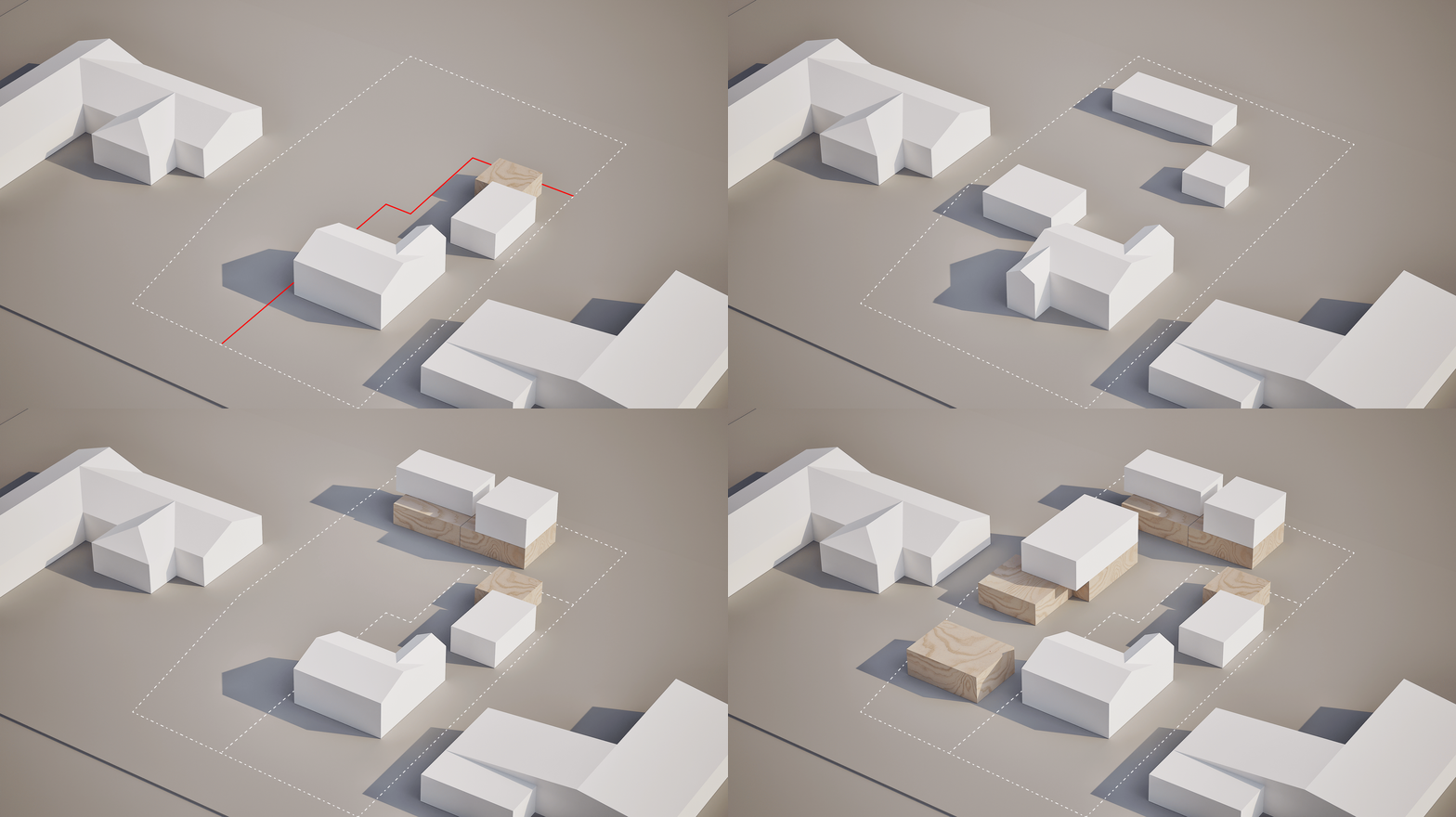
The conversation around California's housing crisis tends to focus on supply, and rightly so. The state has taken strides to unlock more of it. But beyond supply, we've become increasingly interested in flexibility… the idea that a home can be used in a variety of ways by a variety of occupants and households.
This type of flexibility creates durability, homes that need fewer changes over their lifetime, producing an inherent sustainability. Our consulting work with property owners and developers includes studies focused on planning, potential purchases, changes in housing policy, and zoning and entitlements.
These projects have raised important questions for us:
how do we design housing that responds to changing needs over time?
Can an adaptive housing model play a part in the housing and affordability crisis we find ourselves in California?
And could an adaptable model be a more sustainable one?
We hear the debate about what type of housing we need more of. Affordable housing? Missing middle and workforce housing? Family and multi-generational housing? Each term means something different depending on context, and they're often asking the same underlying question: how do we accommodate the way people actually live, the fluctuating nature of our lives, the changing makeup of our households, our shifting economic circumstances?
Our interest lies in choice and adaptability. What if homes could adjust as lives unfold? A new child arrives, or a parent moves in. An adult child returns from school. An income shift creates a need for roommates, or space that can flex more like two separate households than one shared unit. Flexibility in housing could provide a more responsive supply that adjusts to what communities need over time.

A HISTORY OF EXPERIMENTATION
These aren't new ideas. California architects have explored flexible housing extensively. As part of the mid-century explosion in experimentation, Gregory Ain's work remains an important reference, as do experiments by Schindler, Neutra, and others. The Case Study House program pushed these boundaries, experimenting with adaptability, lightweight construction, open plans, and prefabrication.
Looking further back, you find even more variety—boarding houses and other housing typologies that existed before modern codes and zoning restrictions limited what could be built. Flexible living has long been part of the housing ecosystem. Today's challenge is that much of this variety has been regulated away, replaced by more rigid categories.
Interest in reviving flexible approaches is growing. ADU legislation in California has been a notable success, even as other housing reforms have faced obstacles. The success of ADU legislation may stem largely from the choice it gives homeowners. (Include other examples, mommunes, roommate houses). These flexible models take many forms: coliving, multigenerational homes, hybrid income properties, micro-hospitality arrangements, and various shared living configurations. We want to be part of this evolution.
THREE PROJECTS
We've been exploring these ideas through three recent projects that test different approaches to adaptability:

PIEDMONT
The project site occupies a prominent location along Piedmont Avenue, the city’s main retail street, and consists of a two-story mixed-use structure - a bar occupies the ground floor, with two single-bedroom apartments on the second level. Years of deferred maintenance have left the building in need of significant rehabilitation, prompting a comprehensive reassessment of the property's potential.
The approach the client chose to take started with a ground level that would improve the connection to the street and cater to a variety of retail and food tenants. It also increased density through vertical expansion, with initial studies adding two additional floors of residential units.
The architectural strategy we took toward this expansion, emphasizes long-term adaptability and durability to promote resilience. By incorporating flexible spatial arrangements and understated yet robust materials, the design begins to anticipate an array of future use patterns and market demands. This approach aims to extend the building's functional lifespan, minimizing future resource consumption and carbon impacts.
An important discovery was the potential benefit of maintaining and expanding the existing central stair that provided access to the upper-level units. It serves as both a functional circulation element and a spatial organizing device, enabling multiple unit configurations across the floor plate, accommodating various programming scenarios:
Divided floor plates supporting two independent one-bedroom units
Consolidated three-bedroom units with home office potential
Vertically connected units, supporting multi-generational living arrangements or small intentional communities.
ROCKRIDGE
Located a couple of blocks from BART, on a busy corner near a freeway off-ramp, this project features 4-7 townhome units designed as large three bedroom homes. Each unit can be split in various ways to accommodate multigenerational living, roommates, or simply more choice.
[More Detail? How exactly can they split? Separate entrances? Lockable interior doors? Independent utilities? Give at least one concrete example of how a household could reconfigure the space)