
Are we producing the types of homes people need?
THE MISMATCH
There is a fundamental mismatch between how housing in the US is designed and the changing needs and makeup of our households. How can we better accommodate the way people actually live – the fluctuating nature of our lives, the changing composition of our households, our shifting economic circumstances?
We’ve become deeply interested in adaptable housing as a way to meet the evolving needs of individual households while also contributing to a more responsive, resilient housing supply. Flexibility is not just a lifestyle preference; it may be part of how we think about the wider affordability crisis.
Yes, we need more homes, and urgently. But we also need to ask a deeper question: What kind of homes should we build?
ARE WE BUILDING THE RIGHT HOUSING?
Discussions around California’s housing crisis focus largely on supply. And rightly so. Estimates suggest the state is short by one to four million homes – a large spread which speaks to how hard the issue is to measure, much less agree upon approaches to address it - and we still aren’t building enough to keep pace with basic annual demand. Recent legislation has opened more pathways to construction, yet one critical question is often lost in the numbers: Are we producing the types of homes people need?
For much of the 20th century, the ideal American home was designed for a single ‘nuclear’ family. During the post-war period, those households represented over 50% of all U.S. households; single-person households were just 13%. The building industry responded with the now-standard ‘bedroom count’ model – one, two, sometimes three, take your pick. Zoning codes evolved around this, cementing a narrow model of domestic life.
But this ideal no longer reflects our reality, if it ever did. Today, households with 2 parents and children make up only about 18% of households. The rest is made up of household types that are becoming more recognized but not often designed for - single parents, roommates, multigenerational or extended families, intentional communities, “mommunes,” adult children returning home, and countless other arrangements…
Obviously, our lives and circumstances also change over time – a new child or one leaving for school, aging parents, separations, or simply shifting economic circumstances. Yet our homes are largely static. People renovate at great cost or, worse, move away from their communities simply because they have reached a point where the home no longer works for them. Or choose to stay in place with too much space or too little… This can put unnecessary strain not only on the people involved but the broader housing market.
AN ADAPTABLE SUPPLY:
BUILDING IN CHOICE AND RESILIENCE
We have become increasingly interested in the idea of adaptive housing as a means to address not only the specific and evolving needs of individual households over time, but also its potential role in the larger housing affordability crisis.
What if homes could adjust as lives unfold? There is a hole in the market where a range of alternative forms of housing and experimentation could reside. Rather than creating financial risk or uncertainty in attempting to address specific household makeups, we believe designing for choice and possibility would allow owners and occupants choice and opportunity to creatively address their own needs. This type of adaptability also creates a type of durability – homes that need fewer changes and could have a longer lifespan, producing less waste, less carbon and are inherently sustainable.
The concept of flexible living is not new. In California's history, modernist architects like Gregory Ain, Rudolph Schindler, and Richard Neutra, among others, experimented with open plans and adaptable spaces. Looking further back, shared living arrangements were common before modern zoning codes restricted what could be built.
Today, there is a clear appetite for this kind of choice. The widespread success of the Accessory Dwelling Unit (ADU) program in California proves that homeowners want the power to adapt their property to their needs. Our interest is in taking this idea beyond the single-family lot and integrating flexibility into all types of new development.
PROJECTS IN PRACTICE
Over the past year, we’ve worked with property owners and developers on multiple studies focused on feasibility and planning to understand the impacts of changes in housing policy and zoning towards understanding the potential of property acquisitions and investments. These studies included looking at both a traditional approach to unit layout and design as well as exploring and developing adaptable models.

Claremont Avenue : An Addition with Modes
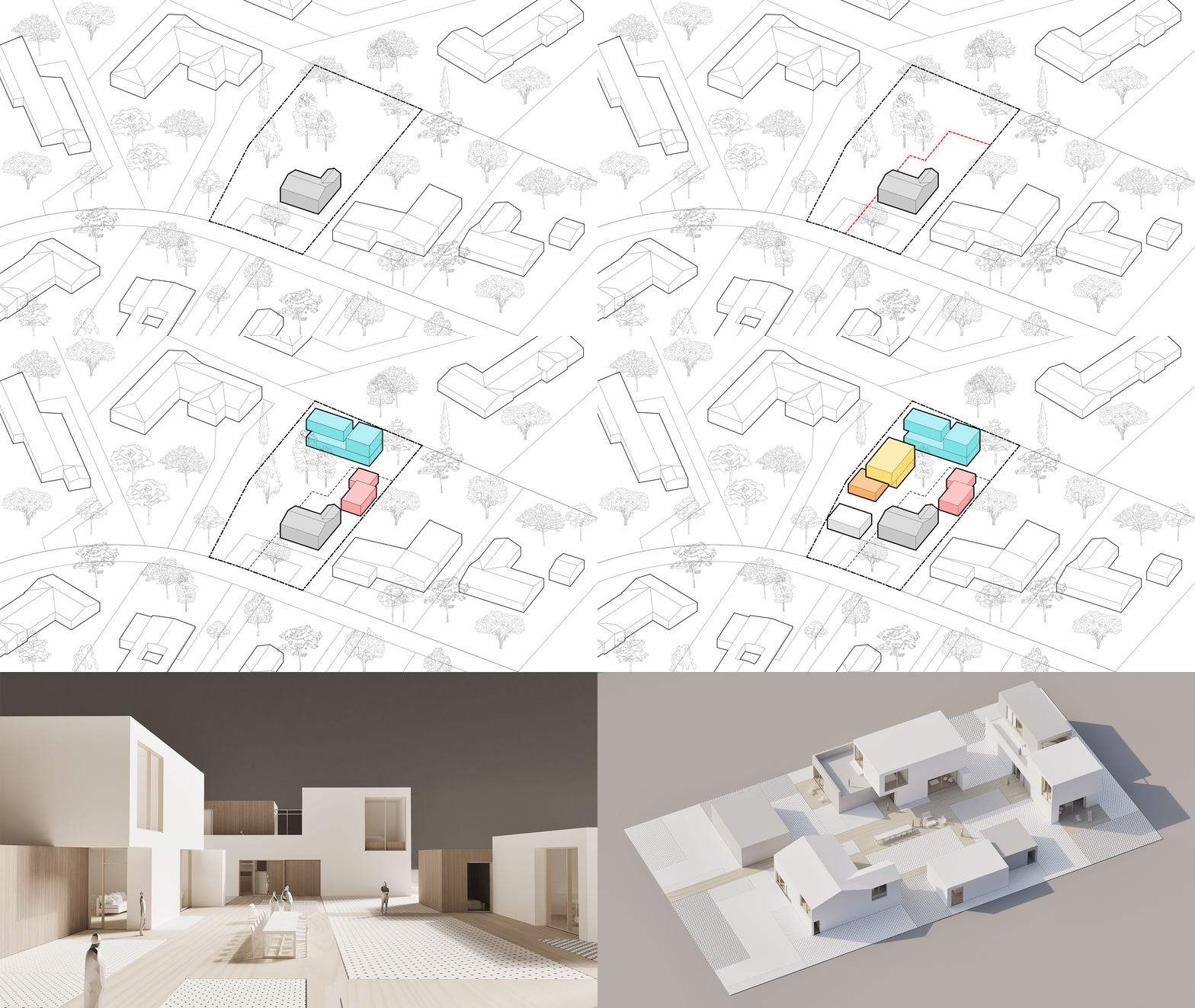
One of our first experiments explored the idea of "modes" – creating three different unit types in one. A space could function as a master suite, an in-law suite (extra bedroom, studio, or office), or a completely separate rental unit.
Piedmont: Density Through Adaptability
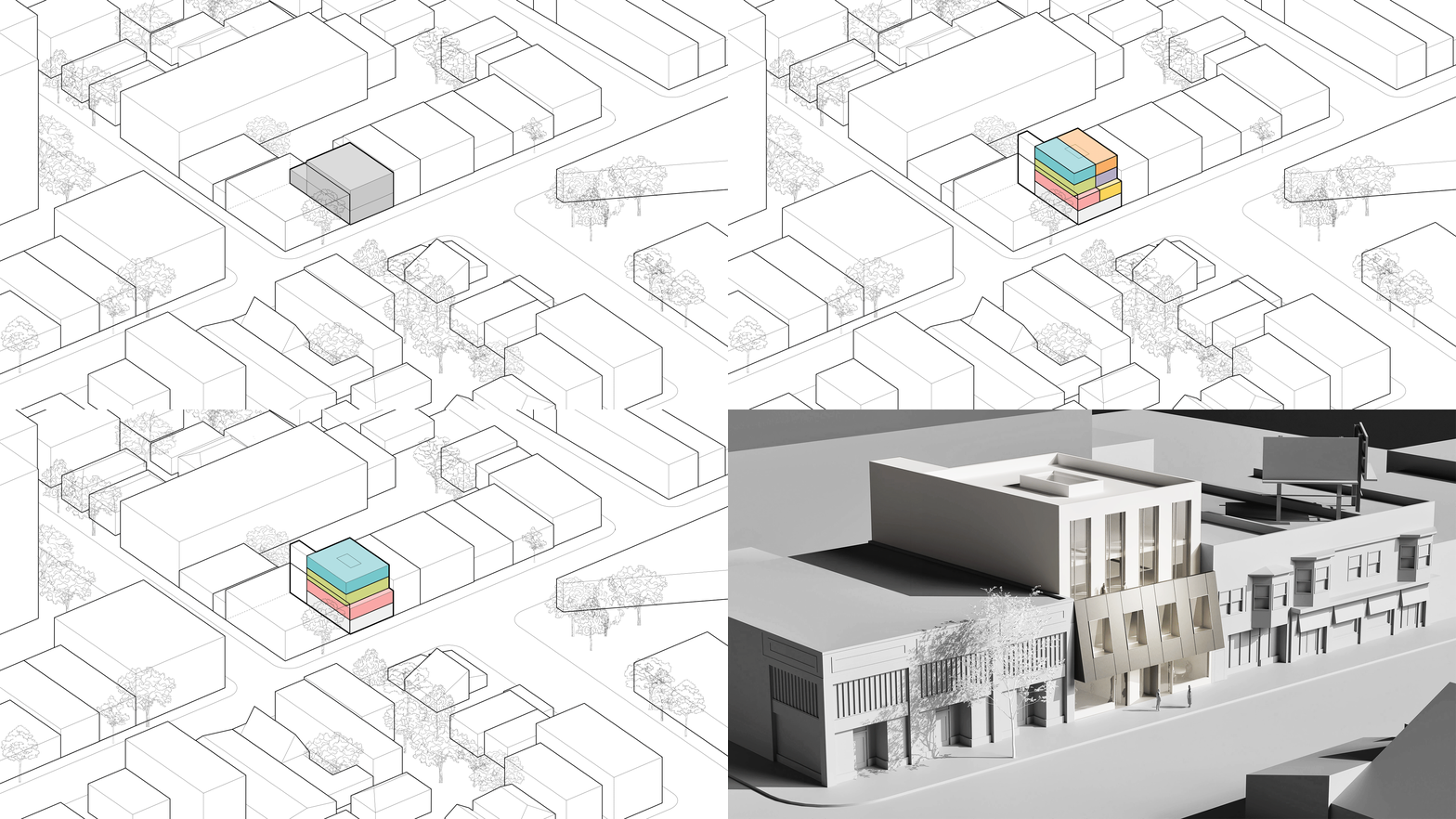
The project site occupies a prominent location along Piedmont Avenue, a retail street, and consists of a two-story mixed-use structure. We studied an increase in density through vertical expansion, with initial studies adding two additional floors of residential units. An important discovery was the benefit of maintaining and expanding the existing central stair. It serves as both a functional circulation element and a spatial organizing device, enabling multiple unit configurations across the floor plate and section to accommodate various configurations.
San Jose: Split Lot, Added Opportunity
A large suburban lot, formerly used mostly for gardening, transformed into a slightly denser arrangement without disrupting the neighborhood scale. We removed a greenhouse, added an ADU, split the lot, and added two more units – creating four homes total where there was one. The owner can now welcome two daughters looking to start families and gain a foothold through homeownership, but can also be understood to address a myriad of other housing scenarios.
Rockridge: Large Units That Subdivide
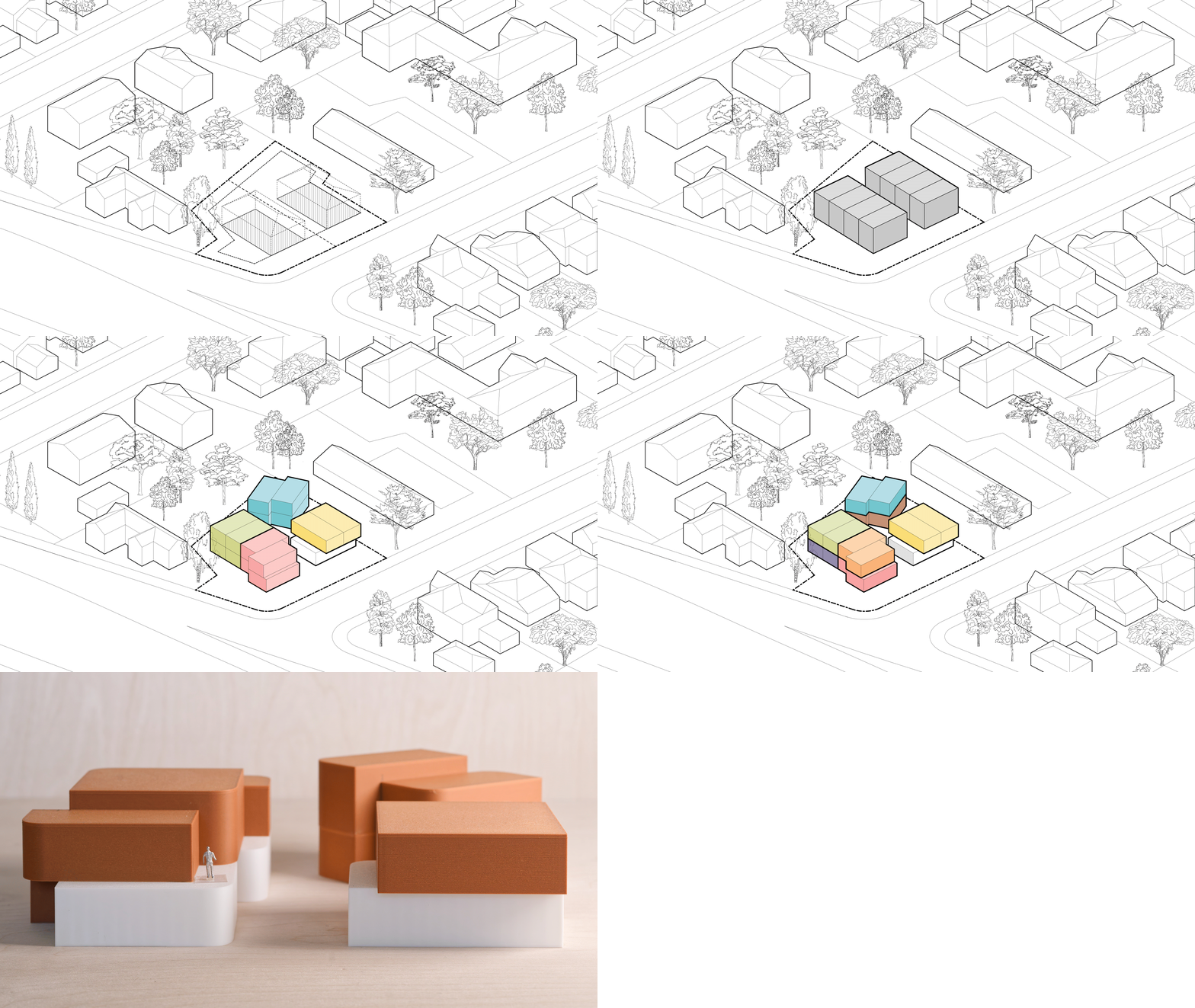
Located a couple of blocks from BART on a busy corner near a freeway off-ramp, this project features 4-7 townhome units designed as large three-bedroom homes. Each unit can be split in various ways to accommodate multi-generational living, roommates, rentals or other alternatives.
LOOKING AHEAD
As California continues to grapple with housing challenges, we believe adaptive design offers a path forward – not as a complete solution, but as an essential approach that addresses both the need for more supply and the reality that people's lives change.
We are looking forward to continuing this exploration with projects and studies that test these ideas further and create spaces for living that are as flexible and resilient as the lives lived within them. We would love to hear your thoughts or any questions you might have.
